
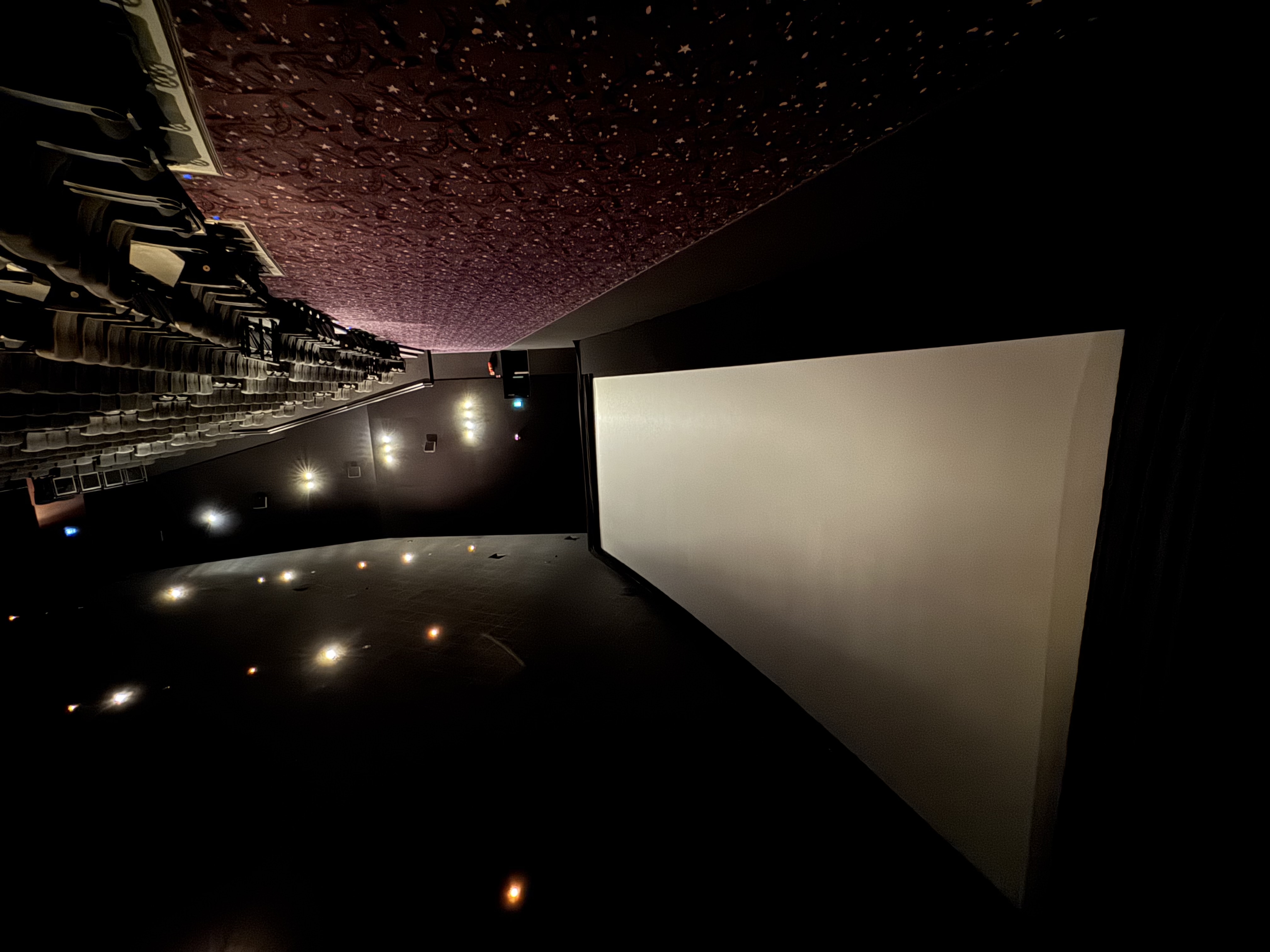
The best screen you've never heard of: Cineworld High Wycombe's Screen 12
It's not an IMAX. It's not a Superscreen. It's Screen 12 of an ordinary multiplex above a shopping centre in Buckinghamshire — and it's one of the largest Scope screens in the country. We measured it.
Ask someone to name the biggest screens in Britain and you'll hear the same list: BFI IMAX, the Superscreens, the Dolbys. Nobody says "Screen 12 at the Cineworld in High Wycombe." One Tripadvisor reviewer called it the largest non-IMAX screen outside London they'd visited — and almost nobody else has noticed it at all. That's exactly why we measured it.
The numbers
One of our members went in with a laser measure. Here's what the room actually is:
- Screen: 15.89 m × 6.79 m — about 108 m² of Scope-format picture, masked at 2.21:1
- 578 seats, the biggest room in a 12-screen building that seats about 2,634 in total
- The auditorium: 22.2 m long, 8.42 m high, fanning out from 24.44 m wide at the screen to 33.14 m at the back
- Front row: 8.53 m from the screen. Back row: 21.06 m
- Xenon projection, and it's been doing this since the day the site opened — 14 March 2008
For context from our own guide: the next biggest screen in the building, Screen 11, is 13.61 m wide. Screen 12 is over two metres wider again — as wide as some of the UK's smaller IMAX screens. Among true Scope screens we currently list only Vue Birmingham Star City's screens 12 and 19 (roughly 21 m × 9 m) ahead of it.
Worth saying plainly: you'll find claims online that this screen is around 72 feet — 22 metres — wide. Our laser says 15.89 m, and we'll take the laser. Fifty-two feet of screen needs no exaggerating, and the gap between what gets repeated online and what a member actually measured is the reason this guide exists.
Why it works
Big screens get ruined by small rooms. This one isn't, and the auditorium measurements say why.
The front row sits 8.5 metres back. In most of this building — most multiplexes anywhere — the front row is three and a half to four metres from the glass; here, row one is further from the screen than row five would be next door. Nobody leaves Screen 12 with a bent neck.
And because the screen is nearly 16 metres wide, even the back row, 21 metres away, still gets a picture that fills your vision — simple trigonometry on our measurements puts it at roughly a 41-degree field of view from the very last seat. That's geometry in IMAX's neighbourhood, in a room that charges standard ticket prices.
The odd bits we love
At the rear of the auditorium sit four VIP boxes, ten seats each, with their own surround systems — a little piece of 2008 showmanship that hasn't been used since the pandemic. If you've ever watched a film from Screen 12's back wall and wondered what those windows were: now you know.
See it while it's still Scope
Here's the twist: as of January 2026, this room is slated for conversion to an IMAX within the next five years — though word is the project sits some way down Cineworld's list, so don't expect hoardings next month. That conversion will be its own kind of exciting. But it also means one of the country's largest true Scope screens is on the clock. If you're within reach of High Wycombe and there's a proper 2.39:1 film on, go and see it the way this room was built to show it.
The receipts: every measurement above was taken in person by the community — that's the full Screen 12 record in the PLF Guide, all twelve screens of the building documented. Spot something wrong, or measured it yourself? Hit "Suggest an edit" on the screen's card. That's the whole point of us.